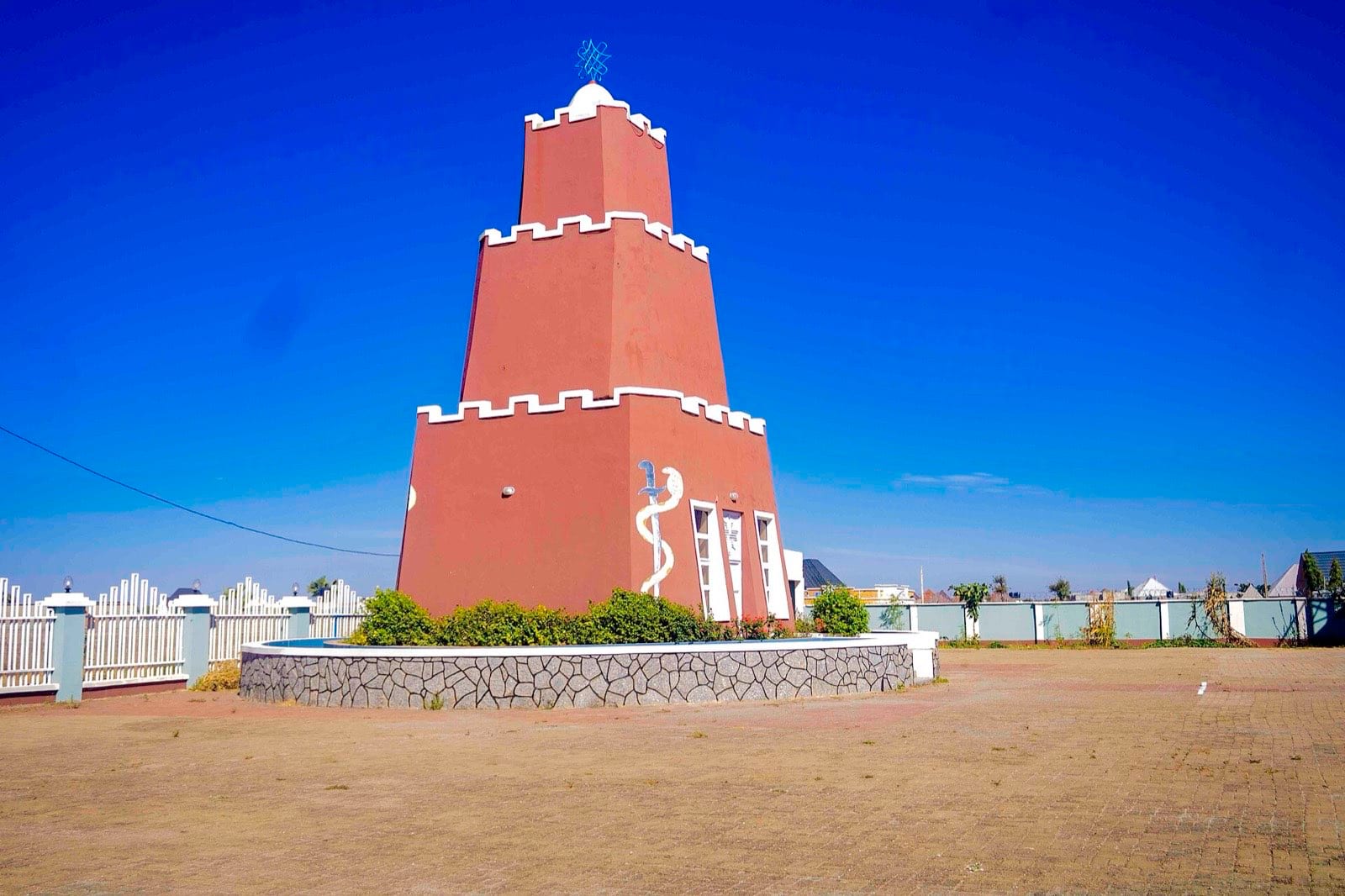
You can see the Gobarau minaret from most of central Katsina, which is not because it is tall — it is about fifteen metres — but because almost nothing around it has been allowed to be taller. It is a plain square tower of mud brick, tapering slightly, and it has been standing since the fourteenth century.
Katsina in that period was the intellectual centre of Hausaland, in a way that Kano — larger, richer, better connected — never quite was. Scholars moving between Timbuktu and Cairo stopped here. The minaret is the physical remainder of that traffic.
Earth architecture survives by being maintained, not by being left alone, and Gobarau has been re-rendered many times. Purists periodically object to this. The objection misunderstands the building: a mud tower that is not re-rendered is a mud tower that becomes a mound in about thirty years.
The city walls that once enclosed all this are largely gone — a fate they share with Zaria's, a hundred and fifty miles south. The minaret survives partly because it had a use, and a building with a use gets repaired.
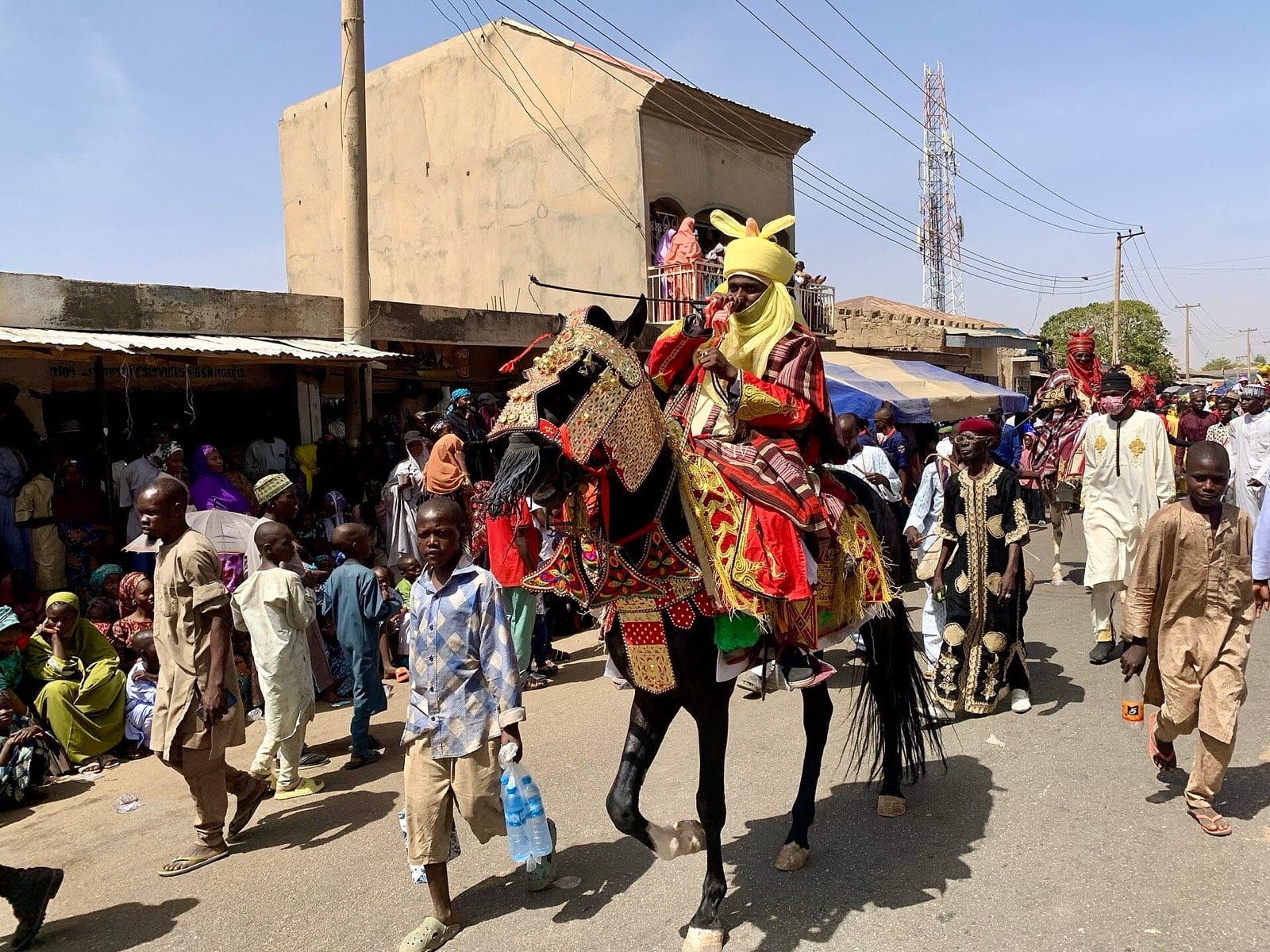
The other thing Katsina has kept is the Durbar. The horses assemble at the emir's palace at Sallah and process through streets that have been doing this for a very long time, which is the same argument the minaret makes in a different material.