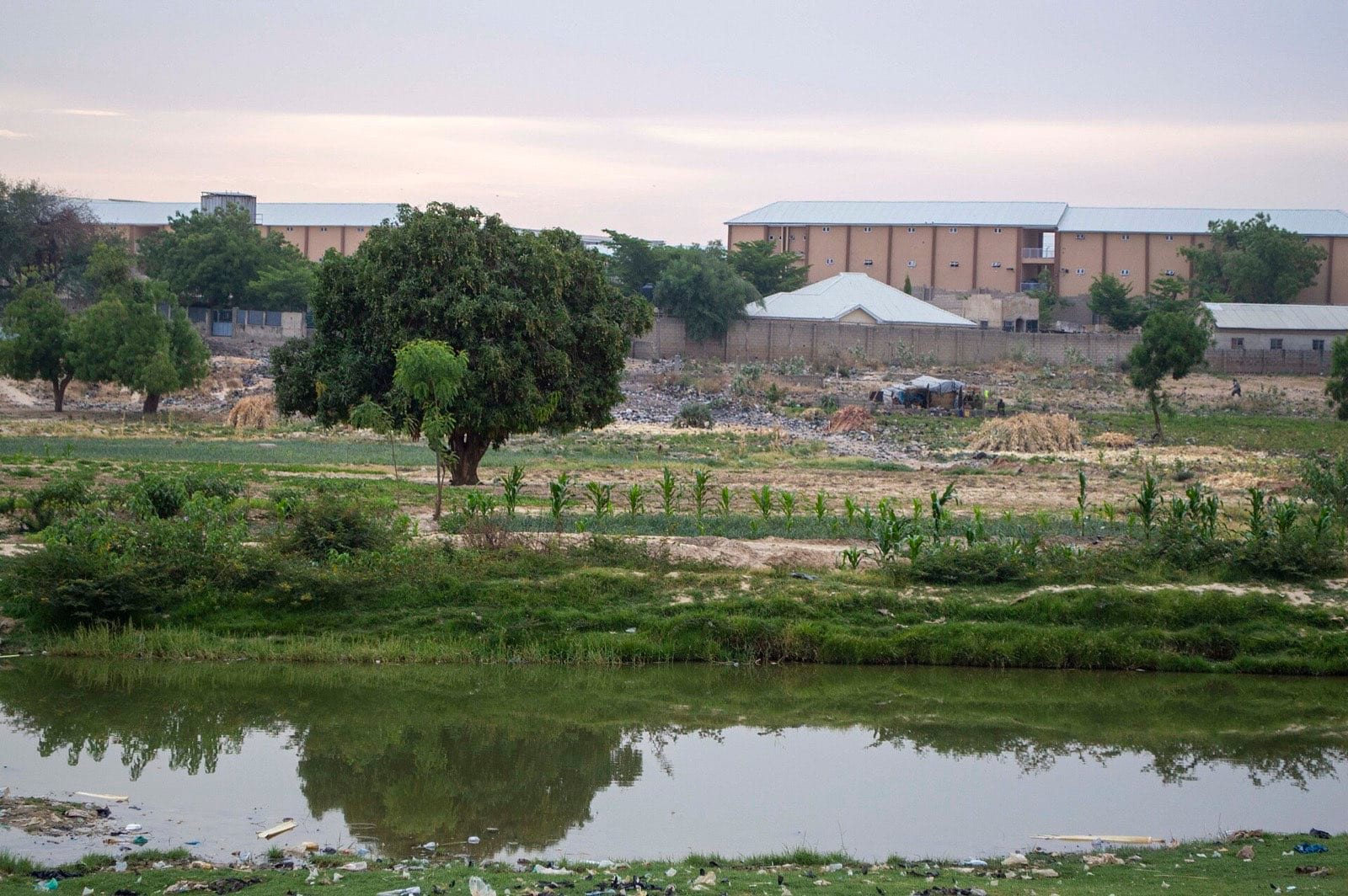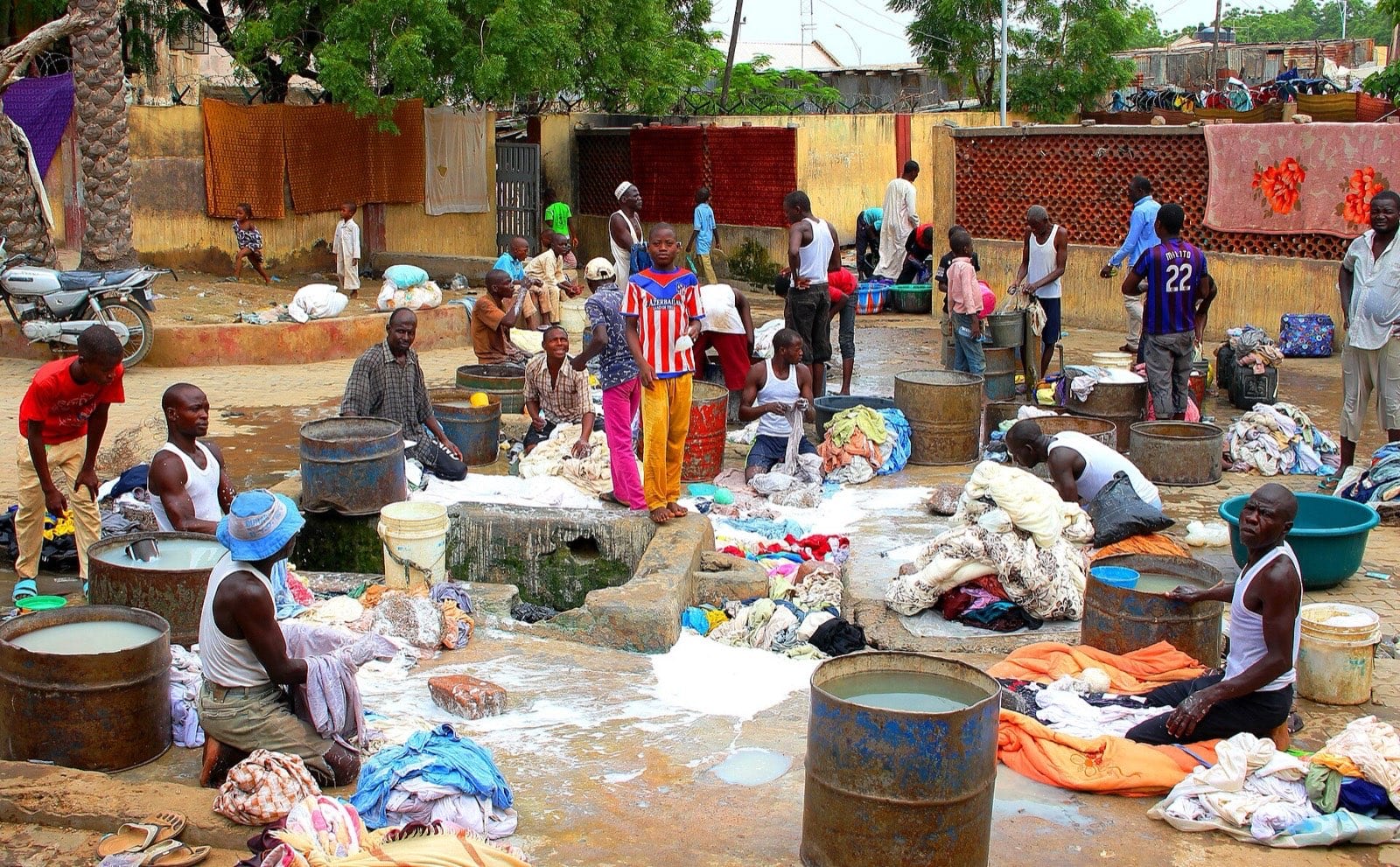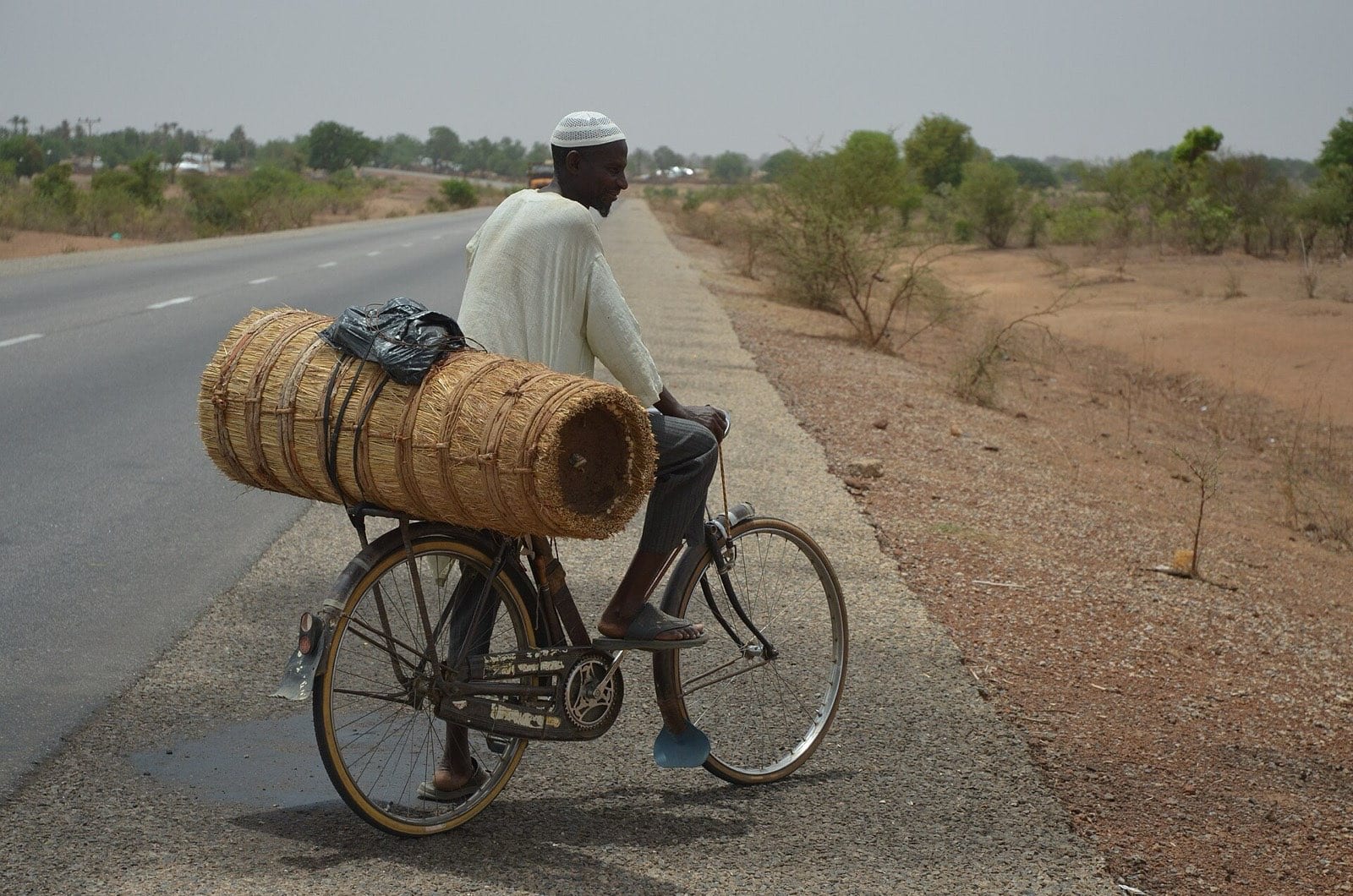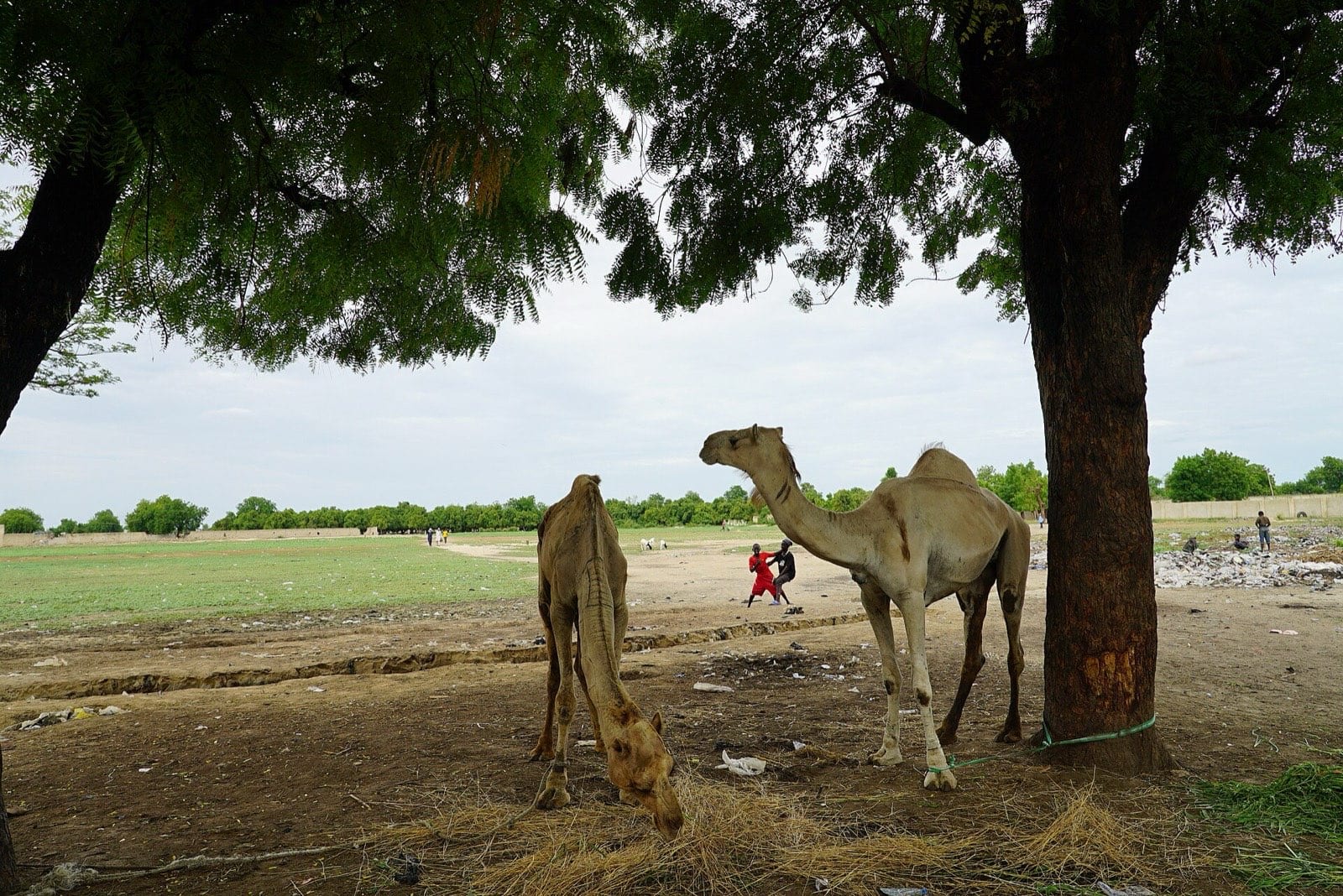
Camels at market in Maiduguri. The trade routes that brought them here are older than the border they cross. Photograph: Ifeatu Nnaobi / Wikimedia Commons (CC BY-SA 4.0)
About Maiduguri
Maiduguri is the largest city in the north-east and the seat of a state with a thousand-year written history. The last fifteen years have made it, involuntarily, a city of arrivals: its population has swelled with people from across Borno. It is a place that is usually reported on for one reason, and it is much older and more ordinary than that reason suggests.
Maiduguri is reported on for one reason, and the reporting is not wrong, but it produces a picture of a city that is only the last fifteen years old. The city is a thousand years older than that, and the camel market is one of the places where you can see it.
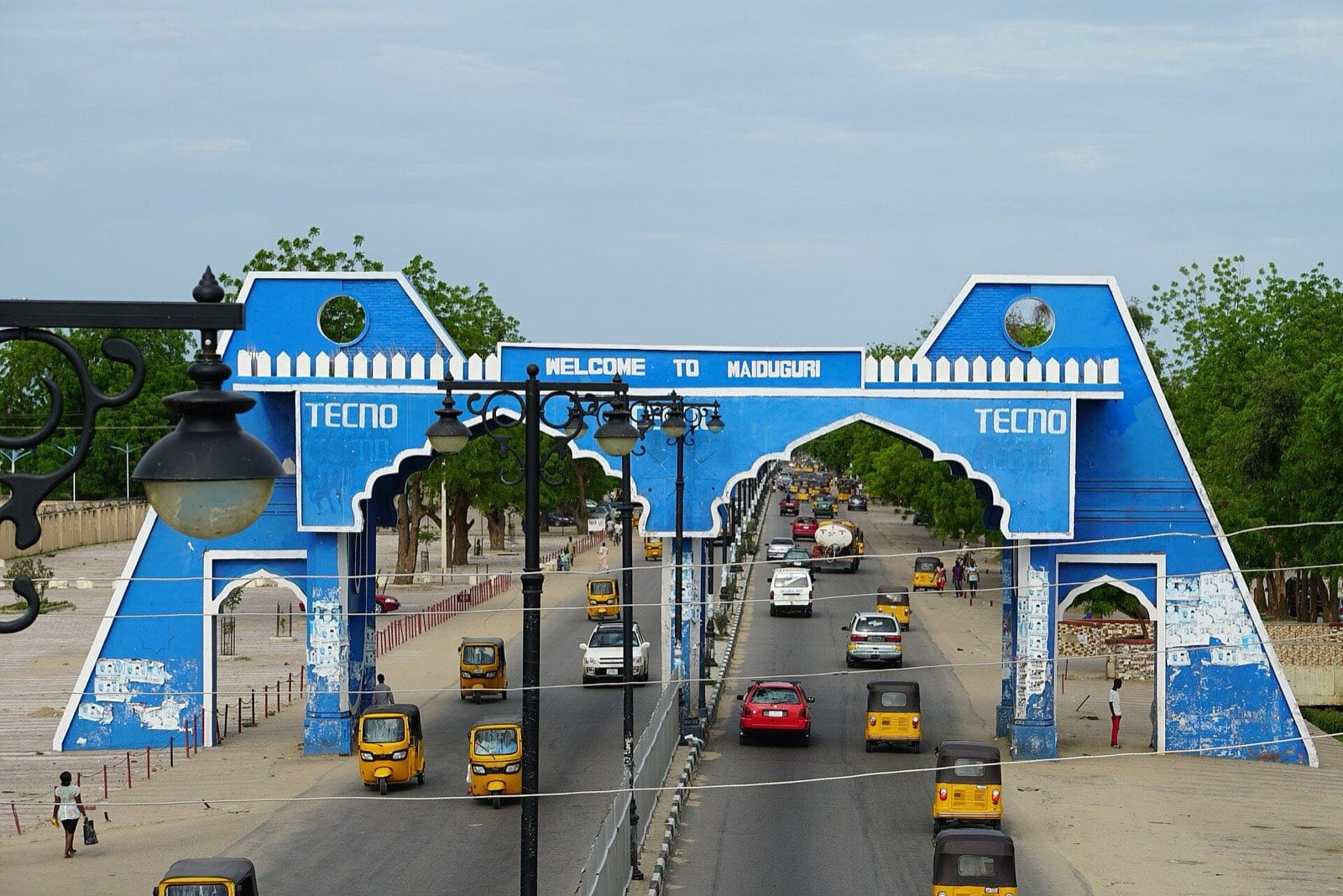
The city gate at Maiduguri, seat of the old Kanem-Borno empire. Photograph: Ifeatu Nnaobi / Wikimedia Commons (CC BY-SA 4.0)
The animals come down from Niger and Chad along routes that predate all three countries. The traders are matter-of-fact about the border, which they treat as an administrative feature of the journey rather than a boundary of the trade.
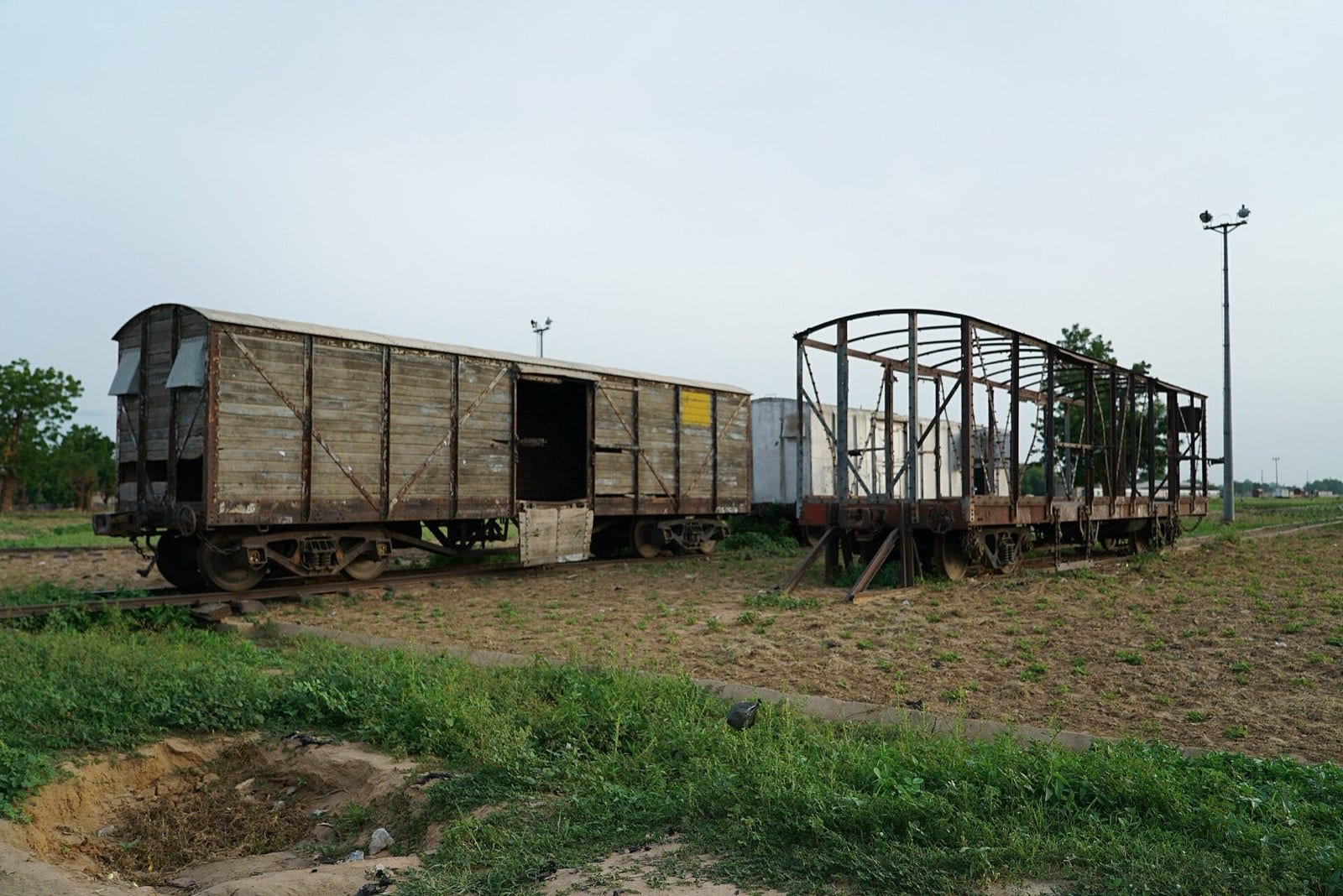
Carriages on the grounds of Maiduguri railway station. The line north-east ran here from Port Harcourt. Photograph: Ifeatu Nnaobi / Wikimedia Commons (CC BY-SA 4.0)
Behind the station stand the carriages of the line that ran to Port Harcourt. They have not moved in a long time. The camels, meanwhile, arrive weekly.
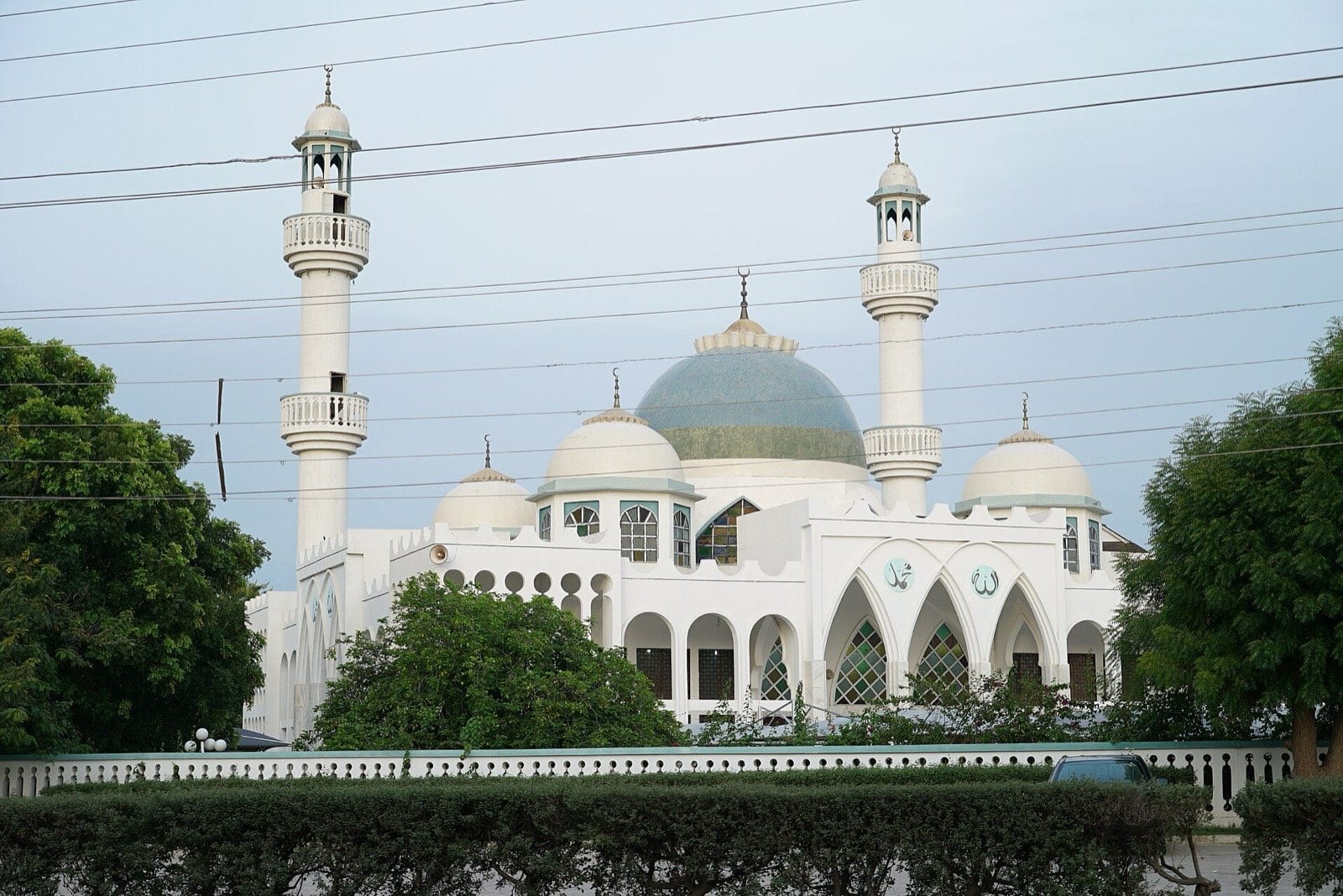
Maiduguri: the Indimi mosque, and the river that runs through the city. Photographs: Ifeatu Nnaobi / Wikimedia Commons (CC BY-SA 4.0); Zakariya Fika / Wikimedia Commons (CC BY-SA 4.0)